One in three people chooses AI. Loneliness stifles corporate innovation. An increasing number of people confide in AI rather than in those close to them
October 27, 2026 (PRLEAP.COM) Business News
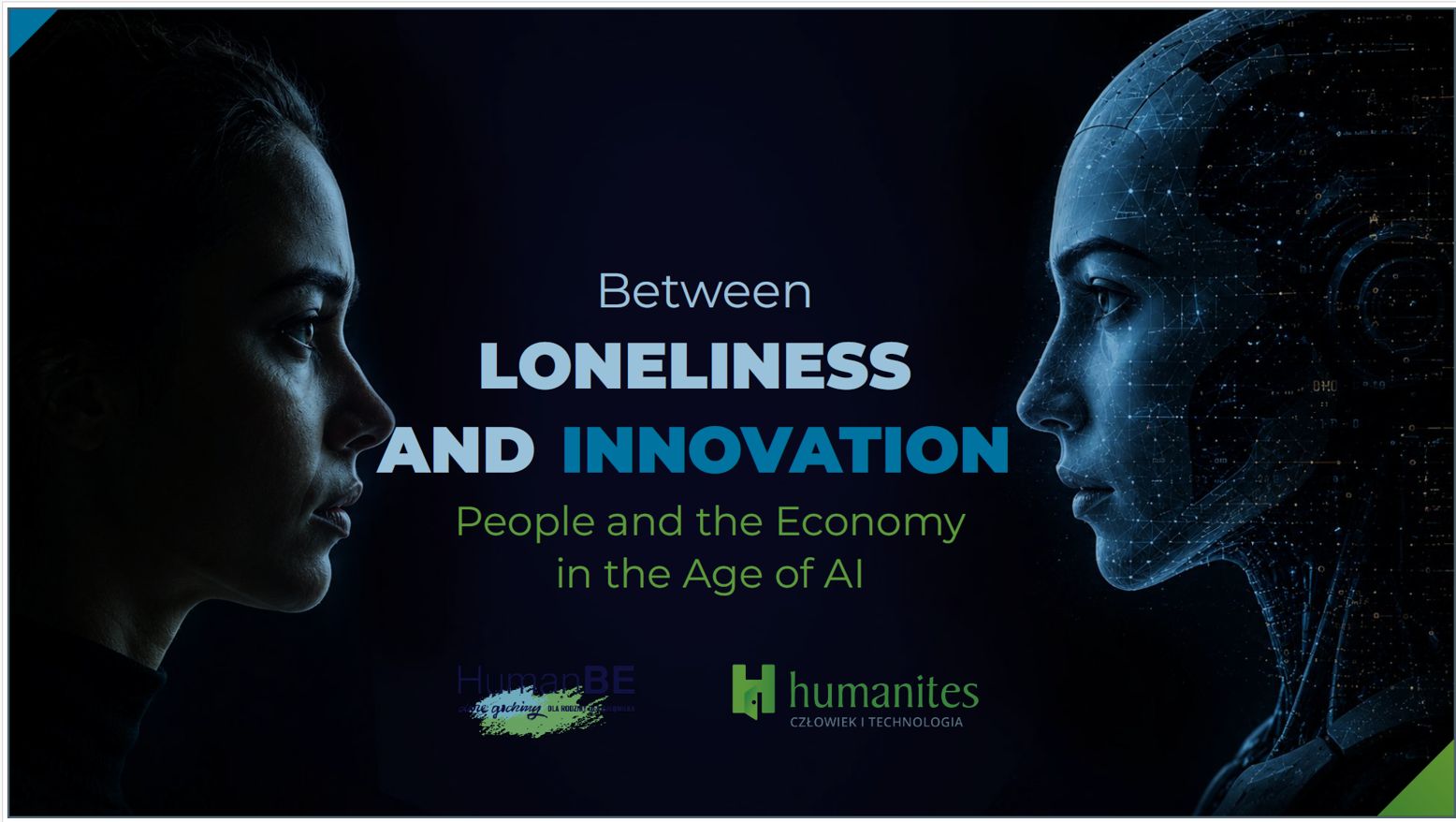
Loneliness is increasingly viewed not merely as a social issue, but also as a business challenge. In 2025, Gartner identified it as a potential risk for companies. Meanwhile, a new study by the Humanites Institute – Human&Technology reveals how human relationships with technology are shifting: 30% of respondents state that they find it easier to discuss their problems with artificial intelligence than with people close to them. Among those aged 18–29, this figure rises to 36%. 86% of those surveyed have already interacted with AI, and 46% use it on a regular basis. At the same time, 43% believe that in the future, people will prefer to talk to artificial intelligence rather than to another human being.
A study conducted in Poland also reveals differences in reported job satisfaction and the sense of closeness. While 48% of people living in single-person households report being satisfied with their work, the figure for those in two-person households is 63%. Meanwhile, 53% and 34% of respondents, respectively, report a lack of a sense of closeness.
The respondents themselves also recognize the importance of relationships: 66% believe that loneliness hinders collaboration, and 57% point to its negative impact on the development of an innovative economy. These findings raise a question for companies: are investments in AI accompanied by sufficient efforts to foster trust, collaboration, and social capital-the very foundations of innovation?
"Feelings of loneliness and a lack of meaningful relationships do not end at the office door. If an individual operates in an environment devoid of closeness and connection, it is difficult to assume that this dimension has no impact on their professional performance. Within teams, we need more than just technology and processes; we also require trust, collaboration, and space for the exchange of ideas. It is here that social capital-a vital organizational resource for growth-is forged," says Zofia Dzik, President of the Humanites Institute – Human&Technology, a business strategist, and the initiator of the HumanBE project.
The study was conducted by WiseRabbit on behalf of the Humanites Institute Foundation, using the CAWI method, with a nationwide sample of 1,050 individuals aged 18–64, between April and June 2026. The research accompanies the 15th edition of the international initiative HumanBE – Two Hours for Family / for Human.
Developed over the past 15 years by the Humanites Institute, this movement-focused on building relationships and workplace culture-has already engaged more than 4,000 companies across 50 countries.
Report and presentation in English: https://ots.de/Ghq32J
Contact:
agata.stec@humanites.pl
Zofia.dzik@humanites.pl
www.humanites.pl | www.2godzinydlarodziny.pl | www.2h4family.com